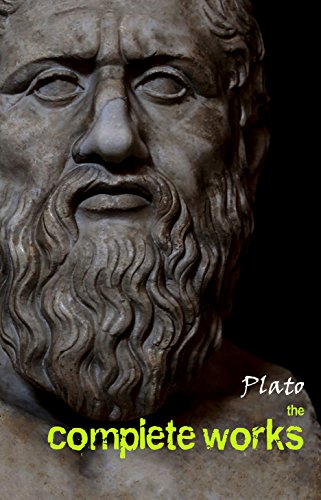
Plato
Quotes and highlights from Plato by Plato — 29 passages I marked up while reading (April 2020). Everything below is taken straight from my Kindle, unedited and in the order I read it.
What this book keeps circling back towisdom, socrates, pretence, injure, corrupt and virtue.
All 29 highlights
No, by heaven! but I shall use the words and arguments which occur to me at the moment; for I am confident in the justice of my cause
‘Yes, Socrates, but what is the origin of these accusations which are brought against you; there must have been something strange which you have been doing?
If you ask me what kind of wisdom, I reply, wisdom such as may perhaps be attained by man, for to that extent I am inclined to believe that I am wise; whereas the persons of whom I was speaking have a superhuman wisdom which I may fail to describe, because I have it not myself; and he who says that I have, speaks falsely, and is taking away my character.
Well, although I do not suppose that either of us knows anything really beautiful and good, I am better off than he is,— for he knows nothing, and thinks that he knows; I neither know nor think that I know.
I found that the men most in repute were all but the most foolish; and that others less esteemed were really wiser and better. I
Then I knew that not by wisdom do poets write poetry, but by a sort of genius and inspiration; they are like diviners or soothsayers who also say many fine things, but do not understand the meaning of them.
And I am called wise, for my hearers always imagine that I myself possess the wisdom which I find wanting in others:
He, O men, is the wisest, who, like Socrates, knows that his wisdom is in truth worth nothing.
they have filled your ears with their loud and inveterate calumnies.
But you have just admitted that the good do their neighbours good, and the evil do them evil. Now, is that a truth which your superior wisdom has recognized thus early in life, and am I, at my age, in such darkness and ignorance as not to know that if a man with whom I have to live is corrupted by me, I am very likely to be harmed by him; and yet I corrupt him, and intentionally, too—so you say, although neither I nor any other human being is ever likely to be convinced by you. But either I do not corrupt them, or I corrupt them unintentionally; and on either view of the case you lie.
There you are mistaken: a man who is good for anything ought not to calculate the chance of living or dying; he ought only to consider whether in doing anything he is doing right or wrong—acting the part of a good man or of a bad.
For the fear of death is indeed the pretence of wisdom, and not real wisdom, being a pretence of knowing the unknown; and no one knows whether death, which men in their fear apprehend to be the greatest evil, may not be the greatest good.
Men of Athens, I honour and love you; but I shall obey God rather than you, and while I have life and strength
You, my friend,—a citizen of the great and mighty and wise city of Athens,—are you not ashamed of heaping up the greatest amount of money and honour and reputation, and caring so little about wisdom and truth and the greatest improvement of the soul, which you never regard or heed at all?
virtue is not given by money, but that from virtue comes money and every other good of man, public as well as private.
Nothing will injure me, not Meletus nor yet Anytus—they cannot, for a bad man is not permitted to injure a better than himself.
he who will fight for the right, if he would live even for a brief space, must have a private station and not a public one.
they like to hear the cross-examination of the pretenders to wisdom; there is amusement in it.
My friend, I am a man, and like other men, a creature of flesh and blood, and not ‘of wood or stone,’ as Homer says;
One who has reached my years, and who has a name for wisdom, ought not to demean himself. Whether this opinion of me be deserved or not, at any rate the world has decided that Socrates is in some way superior to other men.
For his duty is, not to make a present of justice, but to give judgment; and he has sworn that he will judge according to the laws, and not according to his own good pleasure; and we ought not to encourage you, nor should you allow yourselves to be encouraged, in this habit of perjury—there can be no piety in that.
thither I went, and sought to persuade every man among you that he must look to himself, and seek virtue and wisdom before he looks to his private interests, and look to the state before he looks to the interests of the state; and that this should be the order which he observes in all his actions.
And if I say exile (and this may possibly be the penalty which you will affix), I must indeed be blinded by the love of life, if I am so irrational as to expect that when you, who are my own citizens, cannot endure my discourses and words, and have found them so grievous and odious that you will have no more of them, others are likely to endure me.
examining myself and others, is the greatest good of man, and that the unexamined life is not worth living,
But I had not the boldness or impudence or inclination to address you as you would have liked me to do, weeping and wailing and lamenting, and saying and doing many things which you have been accustomed to hear from others, and which, as I maintain, are unworthy of me.
I would rather die having spoken after my manner, than speak in your manner and live.
and in other dangers there are other ways of escaping death, if a man is willing to say and do anything. The difficulty, my friends, is not to avoid death, but to avoid unrighteousness; for that runs faster than death.
If you think that by killing men you can prevent some one from censuring your evil lives, you are mistaken; that is not a way of escape which is either possible or honourable; the easiest and the noblest way is not to be disabling others, but to be improving yourselves.
we shall see that there is great reason to hope that death is a good; for one of two things—either death is a state of nothingness and utter unconsciousness, or, as men say, there is a change and migration of the soul from this world to another.
What I've written around this
Where these ideas turn up in my own work.
- Gnōthi SautonTo know thyself is just as easily understood as a call to become aware of one's limits — a reminder that you are mortal, and far from divine.
- Newcombs Paradox as Information Revelation
- The Difficulty Is the PointHow I came to understand struggle as the cornerstone of my identity.
Read alongside
Other books on the shelf that cover similar ground.
I write about what I read — medicine, technology, and what holds up across centuries — in Side Effects. The essays live in the archive, and the rest of the shelf is on Book Notes.